
Services
We pride ourselves on offering a wide spectrum of dental services and procedures.


- Family Owned & Operated
- Ample FREE Parking
- Flexible Scheduling
- Assignment of Benefits From Most Insurance Companies Including CDCP
- Proven Track Record
- Personalized Care
Why Choose Us
Customized Care for Every Stage of Your Dental Journey
Grandview Dental Centre provides the city of Cambridge with an extensive range of options that are ideal for maintaining and improving the oral health of your family.
We are committed to improving the oral healthcare knowledge of our patients.
We pride ourselves on offering a wide spectrum of dental services and procedures, including: Dental Exams & Cleaning, Fluoride Treatment, Sealants, Composite Fillings, Crowns (caps), Teeth Whitening, Veneers, Bridges, Dental Implants, Root Canal Therapy, Dentures & Partials.
For your convenience we have dentists, hygienists & denturists on-site.
We want your dental experience here in our office to be as enjoyable as possible in every way.

519-622-4500

A comprehensive dental exam is critical to your ongoing dental health and can only be performed by your dentist. At your initial dental appointment we ask that you arrive 15 minutes early and plan to spend 60-90 minutes in our office. Your first appointment will include a comprehensive oral examination as well as dental x-rays to help assess your oral health.
A dental exam can catch problems before you see or feel them. Identifying problems early makes them easier and less expensive to treat.
Your dentist will be looking for:- Tooth decay and damage.
- Signs of cavities.
- Periodontal (gum) disease.
- Signs of oral cancer.
- Condition of previous dental work.
- General condition of your face, mouth and jaw.

The professional cleaning of teeth is sometimes referred to as dental prophylaxis (or prophy for short). The primary function of a dental cleaning appointment is the prevention of cavities (dental caries), gingivitis, and periodontal disease. Regular dental cleanings are the cornerstone for a lifetime of dental health.
Your cleaning appointment will include a dental exam and the following:- Removal of tartar from above and below the gum line.
- Removal of plaque that forms on the teeth causing tooth decay and periodontal disease.
- Teeth polishing to remove superficial stains and plaque not removed during tooth brushing and scaling.
Fluoride is a mineral that exist naturally in soil, water and various foods. Fluoride works by strengthening the tooth enamel making teeth stronger and more resistant to acid attacks from plaque bacteria and sugars in the mouth. All people ingest the mineral to some extent on a daily basis. In addition, approximately 40% of Canadians receive fluoride in their community water supply.
Although most people receive fluoride from food and water, sometimes it is not enough to help prevent decay.
Your dentist or dental hygienist may recommend the use of home and/or professional fluoride treatments for the following reasons:- Deep pits and fissures on the chewing surfaces of teeth.
- Exposed and sensitive root surfaces.
- Poor oral hygiene habits.
- Inadequate exposure to fluoride.
- Poor saliva flow due to medical treatments, conditions or medications.
- A history of dental decay.

Dental sealants are thin plastic coatings that are applied to the grooves (called pits and fissures) on the chewing surfaces of the back teeth and act as a barrier to prevent cavities.
The majority of tooth decay occurs on these surfaces because brushing and flossing can't always get into all of the nooks and crannies of the back teeth. Sealants protect the chewing surfaces from tooth decay by keeping germs and food particles out of these grooves.
The likelihood of developing pit and fissure decay begins early in life, so children and teenagers are obvious candidates. However, adults can benefit from sealants as well.

Composite fillings are a tooth-coloured restorative material used to repair a damaged or decayed tooth. The affected portion of the tooth is removed and then filled with the composite filling. It is then cured with a visible blue light which causes it to harden almost instantly.
Composite resin dental fillings are strong, durable, and make for a very natural looking smile.
Your dentist or dental hygienist may recommend composite resin dental fillings for the following reasons:- To restore chipped or worn teeth.
- To close a space between two teeth.
- To repair cracked or broken teeth.
- To repair damage caused by tooth decay.

A crown (or cap) is a dental restoration that covers the entire visible surface of an affected tooth. If a tooth is damaged but not lost, a crown can be used to restore its shape, appearance and function.
A tooth that has been fixed with a crown looks and works very much like a natural tooth. Although there are several types of crowns, porcelain are the most popular because they best resemble your natural teeth to provide a beautiful long-lasting smile.
Your dentist or dental hygienist may recommend a crown for the following reasons:- To repair broken or fractured teeth.
- For cosmetic enhancement..
- To restore decayed teeth..
- To repair fractured fillings.

Over time, teeth often become discoloured and stained by food, beverages and tobacco. Professional Tooth whitening (or bleaching) is a simple, non-invasive dental treatment that can dramatically enhance the beauty of your smile.
There are two types of professional whitening, in-office and home treatment. The most popular method is using a home tooth whitening system that will dramatically whiten your teeth. Both professional options are stronger and more effective than over-the-counter products. Since tooth whitening only works on natural tooth enamel, it is important to evaluate replacement options for any old fillings, crowns, etc.
Your dentist or dental hygienist may recommend teeth whitening for the following reasons:- Fluorosis (excessive fluoridation during tooth development).
- Normal wear of outer tooth layer.
- Stained teeth due to medications (tetracycline, etc.).
- Yellow, brown stained teeth.
A veneer is an ultra-thin, durable, tooth shaped porcelain shell that covers the front side of a tooth. Veneers can improve the appearance of teeth that are permanently stained, poorly shaped, chipped, worn, or poorly spaced. They are custom made in a dental laboratory then bonded onto the front of teeth to create a durable, beautiful and attractive smile.
Your dentist or dental hygienist may recommend veneers for the following reasons:- Create a beautiful, white smile.
- Fix crooked teeth.
- Reshape teeth.
- Correct uneven or unwanted spaces.
- Repair chipped or worn teeth.
A dental bridge is a fixed (non-removable) dental restoration that consists of one or more prosthetic teeth that bridge the gap created by missing teeth. There are several types of fixed dental bridges, including traditional fixed bridges, cantilever bridges and resin-bonded bridges. The porcelain fixed bridge is the most commonly used and best resembles the look and feel of your natural teeth. This type of bridge consists of an artificial tooth (or teeth) fused between 2 crowns that go over the anchoring teeth on either side of the gap. Dental bridges are highly durable and can enhance your smile for many years.
Your dentist or dental hygienist may recommend dental bridges for the following reasons:- Fill space of missing teeth.
- Maintain facial shape.
- Prevent remaining teeth from drifting out of position.
- Restore chewing and speaking ability.
- Restore your smile.
- Upgrade from a removable partial denture to a permanent dental appliance.

Dental implants are a stable and secure surgical option for replacing one or more missing teeth. A dental implant uses an artificial root usually made of titanium. The implant is surgically inserted into the upper or lower jawbone and an artificial tooth is attached to the implant. The implant acts as an anchor to hold the replacement tooth in place.
The teeth attached to dental implants are durable and natural looking to help enhance and restore your smile!
Your dentist or dental hygienist may dental implants for the following reasons:- Replace one or more missing teeth without affecting adjacent teeth.
- Resolve joint pain or bite problems caused by teeth shifting into missing tooth space.
- Restore a patient’s confident smile.
- Restore chewing, speech, and digestion.
- Support a bridge or denture, making them more secure and comfortable.

Root canal therapy is the process of removing infected, injured or dead pulp (the living tissue inside the tooth) from the space inside your tooth - called the root canal system. The canal is then filled with materials designed to prevent infection from recurring and restore the tooth to its full function.
A successful root canal treatment lets you keep your tooth rather than having it extracted. Keeping your tooth helps to prevent adjacent teeth from drifting out of line, causing further problems.
Your dentist or dental hygienist may recommend root canal therapy for the following reasons:- Decay has reached the tooth pulp (the living tissue inside the tooth).
- Infection or abscess have developed inside the tooth or at the root tip.
- Injury or trauma to the tooth.
- Minimal to severe pain.
- Tooth discoloration.
- Sensitivity to hot and cold.
- Swelling and irritation in the surrounding gum tissue.
- Sometimes no symptoms are present.
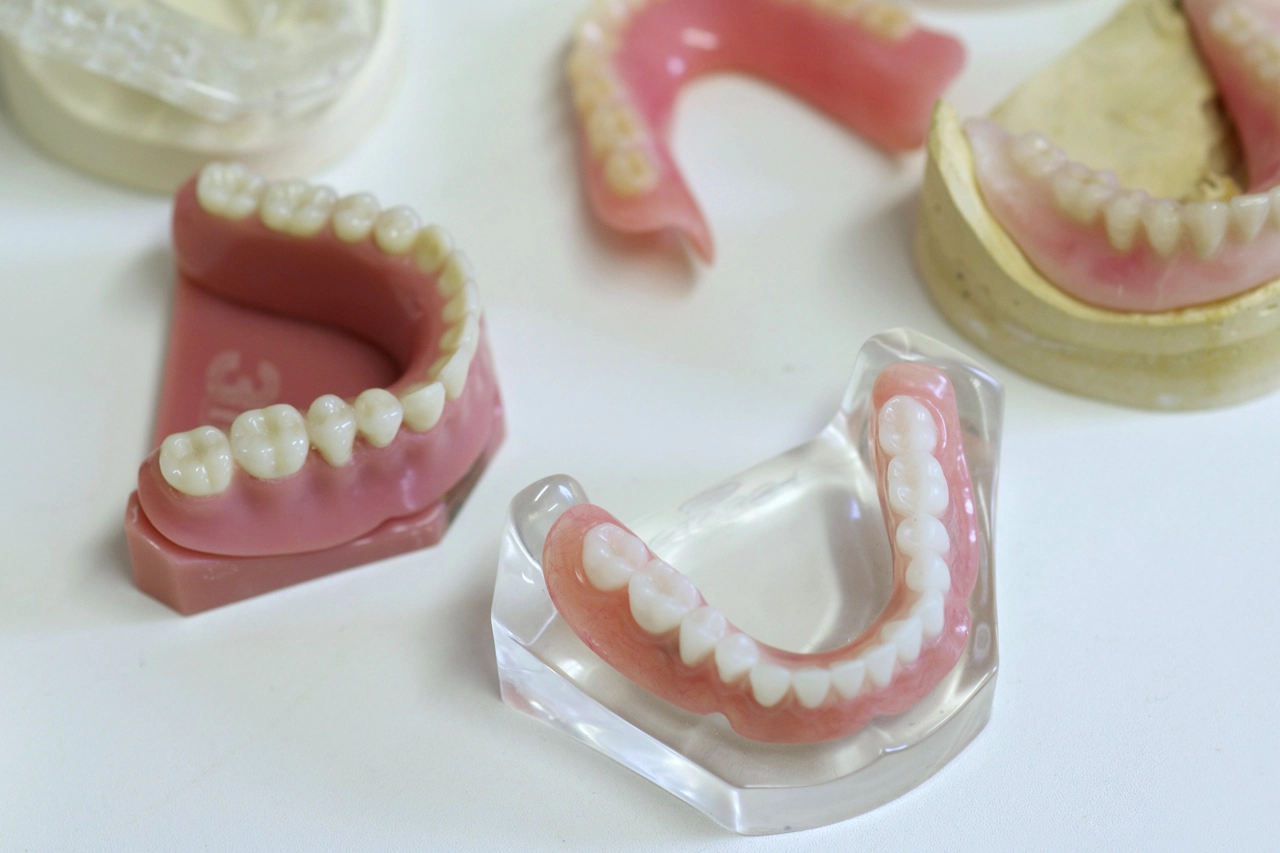
- Loss of all teeth in an arch.
- Loss of several teeth in an arch.
- Enhancing smile and appearance.
- mproving chewing, speech, and digestion.
Laughing gas is used in the dental office for its calming effects. It enables patients to better tolerate lengthy dental procedures and makes the overall experience a more positive one.
Laughing gas is a colorless, almost odorless gas administered through a small mask that covers the patient's nose. The advantages of laughing gas are its rapid onset and quick recovery.
Our office is equipped with laughing gas and our doctors and staff are highly trained in the safe administration and management of it.
Please feel free to discuss this option further with your doctor.